
VIDEO


Blog
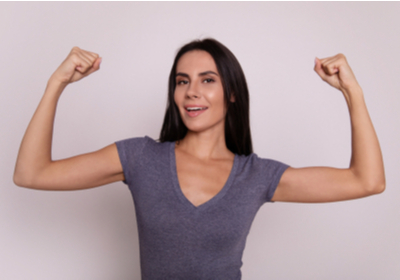
Fit and strong arms is the goal of every fitness enthusiast. The thing is our arms are always the center of attention because it’s pretty difficult to hide them under clothes throughout most of the year. So how to make sure your arms look good in any clothes? Well, this is exactly what we’re going to talk about in this article. So without any further ado, let us begin.
Do Not Expect Immediate Results
Most people believe that a month of exercising is enough to see drastic results and therefore if they don’t see any progress, they simply give up. Of course, it’s not the best strategy. In fact, you shouldn’t expect immediate results. You have to move towards your goal gradually and patiently. The thing is, because of our anatomy, growing arm muscles is pretty challenging, especially if you want to get rid of the fat in the triceps area. So take baby steps and do not give up if you don’t see the result after just a few weeks of training.
Always Warm Up before Training
Many people underestimate warming up, thinking it’s not necessary. Obviously, it is wrong. You have to warm up before doing any type of exercise to avoid injuries, especially if you do not do sport regularly. So how to warm up before an arm workout? Here are some simple warmup exercises:
Arm rotation (2-3 minutes)
Arm stretches above your head
Scissors exercise
Wrist rotation (2 minutes)
These simple exercises will help you warm up and proceed to more challenging workouts for arms.
Do Effective Exercises
Not all the exercises can actually help you achieve your goal, which is why it is important to select those workouts that actually work. We recommend the following exercises for developing arm muscles:
Lateral raise
Push-ups
Plank
Dumbbell row
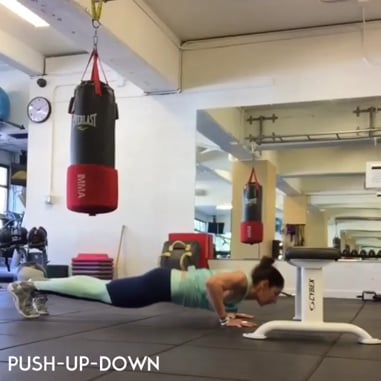
Plank to push-up
Incline bicep curl
Underhand seated row
Prone dumbbell spider curl
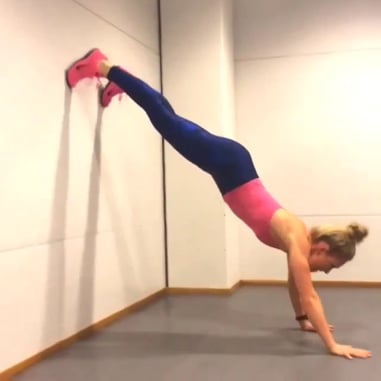
Diamond press-up
Javelin press
These workouts will surely help you work on your arms, so make sure to find out more about them as well as try them.
Stretch After Your Workout
Stretching is extremely important for pretty much all muscle groups and arms are not an exception. It helps to relieve muscle tension as well as prevent muscle soreness. So after you are done with the strengthening exercises for your arms, make sure to stretch for at least a few minutes. You can do the following stretching exercises:
Eagle arms
Standing bicep stretch
Reverse prayer
Horizontal arm extensions
Assisted side bend
Overhead triceps and shoulder stretch
Fingers up and down stretch
Cross-body shoulder stretch
These simple stretches will surely help you reduce or even avoid muscle soreness after working out, so give them a try.
Final Thoughts
Strong and fit arms is perhaps the biggest dream of all fitness enthusiasts and not only. Luckily, regular training can help you quickly achieve this goal. So why don’t you start moving towards your dream now?
Read more

СWorking on the core muscles is not only essential for good looks, but also for your health. In this article, we will talk about core muscles and how to develop them. So without any further ado, let us begin.
Core Muscles: What Do They Consist of?
To put it simply, core muscles consist of two main groups, which are central and peripheral. The central muscles resemble a sac that protects internal organs by covering the abdominal cavity. In other words, we need these muscles to keep the vital organs safe. In fact, if we didn’t have these muscles, a slight kick in the abdominal area would cause significant damage to vital organs. Central muscles can be divided into several parts, which are:
Front - abs
Lateral parts - oblique muscles and the surrounding muscles
Back - the muscles that support the spine
Upper wall - diaphragm
Lower wall - pelvic floor muscles
The second group of core muscles, the peripheral muscle group, consists of the trapezius, the latissimus dorsi muscle, the pectoralis muscle, the buttocks, and the muscles of the shoulder girdle. These muscles are essential for our posture and back health, which means that developing those is rather important for everyone who wants to be healthy and look beautiful.
Both central and peripheral core muscle groups are extremely significant for our health, posture, as well as the way we look. Therefore, in the next paragraph, we are going to talk about the best exercises for strengthening these muscles.
Best Workouts for Strengthening Core Muscles
So we made it pretty clear that developing core muscles is important for pretty much everyone. So what exercises can you do to strengthen these muscles? Well, here they come:
High plank
Supine toe tap
Hollowman
Bird Dog
Crunches
Bicycle crunch
Superman
Warrior crunch
Supine leg lifts
Elbow to knee
Bridge
Mountain climber
V-sit
V-ups
Side plank
Plank shoulder taps
Turkish get-up
Elbow plank twists
As you can see, there are many workouts that will no doubt help you develop core muscles and eventually become healthy and fit. So why don’t you grab your fitness mat and try at least some of these useful exercises to see their effectiveness yourself?
Wrapping Up
Not only are core muscles essential for beautiful abs, but also rather important for your back health and posture. Furthermore, these muscles protect your internal organs, which is a pretty important feature. Therefore, if you regularly train but you always avoid core exercises thinking they are not as important as the workouts for your legs or arms, you better stop doing that because core muscles are perhaps the most important muscle group in your body.
Read more
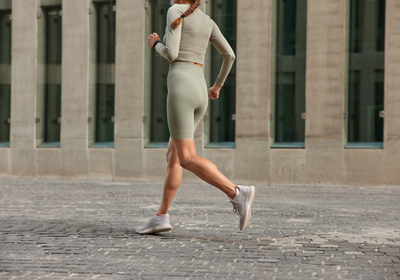
In the initial stages of training, while people focus on working the chest, arms, and back, the calf muscles are often neglected. As a result, exercises to strengthen the calves are delayed or rarely performed, resulting in a lack of progress. The calf muscles, like the deeper muscles of the back, get little rest during the day because they must support the weight of the body, help maintain balance, and stabilize the joints when walking. This means it is at a lower level of development and the approach to working with it should be different.
Thus, we decided to share some exercises for strengthening your calves. Let’s check them out.
Calf 45
Of all the exercises intended to develop the calf muscles, this exercise is one of the most challenging. It involves changing the angle of the legs, which involves not only the calves but also the soleus muscles. To perform this exercise, you will need the Gackenschmidt's Machine. Depending on the design, you will stand in front of it or not. Set an appropriate working weight. This is calculated as the arithmetic mean of the working weights from the previous two exercises. Then adjust the weights according to the load. Then lower the heel and stretch the calf as much as possible. Lift with the toes. Hold under extreme tension for 1-2 seconds.
Dumbbell Calf Raises
This exercise is designed for all levels of athletes and is considered a basic exercise to build calf muscles. Start with standing on a wooden block. You can do this in Smith by placing a step platform under your feet and placing a barbell on your shoulders. Hold your body in a straight position. If you need extra weight, you should take dumbbells or kettlebells. Next, lower your heels under the bar and stretch your ankles as much as possible. Stand up on your toes in a powerful impulsive movement. Hold this position for 1-2 seconds and pull your calves up. Slowly lower yourself back to the starting position.
Squat Calf Raises
This exercise is great for lazy workouts and will be a great option for beginners. Sit on the seat of the training machine. Place your toes on the support step. Bringing your heels down to the floor as far as possible, lower the lever with the soft stop to your knee and lock it.
Leg Press
Lie down on a leg press machine. Find a platform where your legs are straight. Fix the speed. You only need to do two movements. Removing the platform from your foot, squeeze it with your toes. Return your toes to their original position.
It is important to know that posture has a much greater impact on the development of the shin and calf muscles than movement. Flat feet, if not taken into account and compensated for, can also prevent the shaping of the calves. To improve the calves without exercising, the selection of the proper footwear and a corrected gait is necessary.
Well-trained calves will help you perform certain exercises better as well as make your legs look great. So take another look at these exercises and be sure to try them next time.
Read more
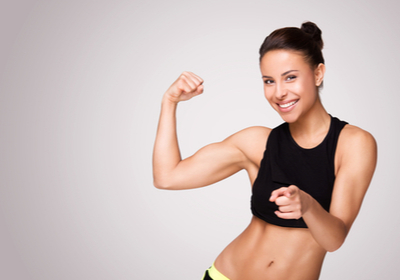
Relief of the biceps is one of the main goals of everybody who does sports and works on their body. At the same time, it’s pretty hard to develop these muscles because of a wide variety of reasons. In this article, we’ll talk about biceps and how to develop these muscles. So let us dive in.
What Is Biceps?
The biceps is the muscle of the upper arm that consists of two parts, which are the long head and the short head. The muscle is connected to the bone with the proximal biceps tendons in the shoulder joint and the distal biceps tendons in the elbow joint. To put it simply, the biceps is a big muscle that is situated in the upper arm from the shoulder to the forearm. The main function of the biceps is to extend and flex the arm at the elbow. It also helps rotate the forearm and hand. So basically, this muscle allows us to lift objects, hold heavy things, and do many other daily things.
Tips on How to Grow Biceps?
Certainly, everybody dreams of relief biceps muscles, but achieving this goal is not that easy. In fact, except for working out, you need to do a lot of other stuff to grow biceps muscles. So here are some tips and tricks on how to grow biceps fast and stress-free:
Eat more protein. For building any muscle, our body needs amino acids and the best way to get them is to eat more protein.
Exercise regularly. In order to succeed in any area, you need to practice regularly. The same goes for developing bicep muscles - you need to work out regularly.
Consider having your thyroid checked. If you eat protein and exercise but you still see no progress, you might want to visit a doctor and have your thyroid checked because there might be some hormonal issue.
Don’t be upset if you don’t see immediate results. Growing biceps takes quite a lot of time, so don’t be upset if after a few weeks of training you see no result. Just continue moving towards your goal, and soon, you’ll reach it.
Make sure you do the right workouts. Not all arm workouts are aimed at the biceps, so you have to ensure you do the right exercises. If you have any doubts, you can always consult your personal trainer or check out this information on the internet.
These simple tips will help you reach your goal faster, so make sure to use them.
Best Workouts Biceps
To wrap up, we would like to provide you with some basic biceps workouts. So without any further ado, here they come:
Barbell curl
Standing dumbbell curl
Cable curl
Zottman curl
Chin-up
Barbell bent-over row
Reverse-grip bent-over row
Underhand seated row
EZ-bar preacher curl
Twisting dumbbell curl
Cable hammer curl
Inverted row
Hammer curl
Meadows row
Concentration curl
Seated cable row
Incline dumbbell curl
Final Thoughts
Gorgeous relief biceps is a dream come true for many men and women. But why dream of it if you can make it real? Explore the biceps workouts in the video section and make your dream of having developed biceps come true.
Read more
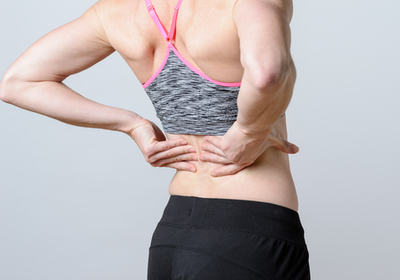
Lower back muscles easily get sore and injured as well as are rather challenging to train. At the same time, these muscles are essential for one’s back health. So what is the anatomy of lower back muscles, and how to develop them? This is exactly what we are going to talk about in this article.
Lower Back Muscles: Anatomy & Functions
The lower back muscle group consists of several muscles, which are multifidus muscles, erector spinae, spinalis, and latissimus dorsi. These muscles are essential for posture, moving, and even involved in the walking process. In fact, lower back muscles are super important for normal functioning, and those people who have suffered any lower back injuries know it. In addition to that, these muscles are actively involved in the special moves in certain sports like gymnastics as well as in various dance styles. So even though these muscles seem to be small and unimportant, yet they actually have lots of functions.
Why Is It Important to Develop Your Lower Back Muscles?
Many people believe that, in terms of the spine, you only need to work on the trapezius and upper back since these muscles are essential for the right posture. Certainly, it’s not exactly true. In fact, you have to work on your entire spine to harmoniously develop all the muscles of your back. Plus, the lower back easily gets injured, especially if you lift something heavy, but if you have strong and developed lower back muscles, you can reduce the risks of having such an injury. So no matter if you are an office worker or a professional athlete or dancer, you need to work on your lower back muscles.
Workouts for the Lower Back Muscles
So how can you make your lower back muscles stronger and therefore lower your chances of getting a nasty injury? Well, here are some exercises you might want to try:
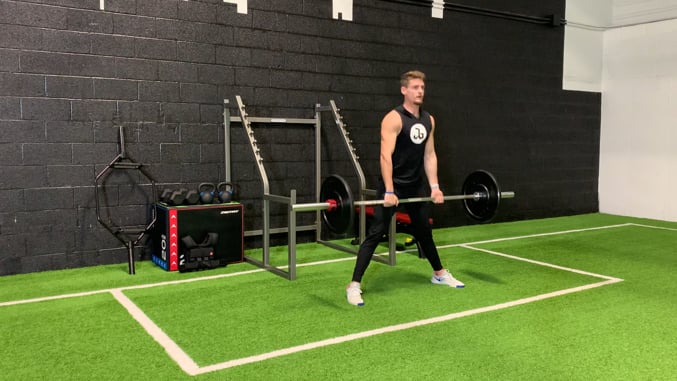
Rack pull
Harvesting apples
Bent over row
Side stretching
Barbell good morning
Belly roll
Back extension
Side plank
Superman
Glute hamstring raise
These simple exercises will no doubt help you make your lower back stronger and healthier, so do not hesitate and give them a try.
Final Thoughts
Developed lower back muscles are not only needed for professional athletes or dancers but also for those people who want to maintain their back health. So make sure to include at least a few lower back workouts into your exercise routine. Trust us, you won’t regret it.
Read more