
VIDEO
Elbow Plank Jumping Jacks, Plank Knee to Elbow, Plank Hip Dips
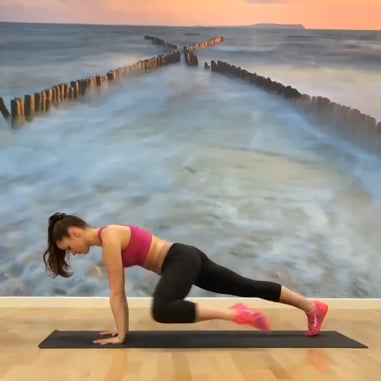
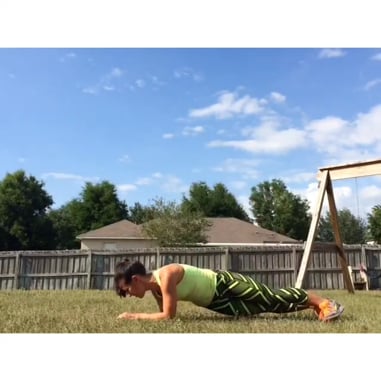
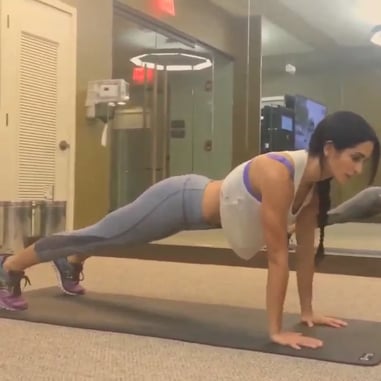
1.Start with the elbow-plank position with your feet together. Your body should be in a straight line from your head to your heels. Engage your abs to protect your lower backfrom injury. Jump off feet wide to each side as you are doing a horizontal jumping jacks. 2.Lay face down on a fitness mat. Push yourself up into a plank position. Keeping your core tight and back flat, bring your right knee to your left elbow. Make a pause for a second then slowly get back to the starting position. 3.Start in a low-plank position. Rotate your hips to the right and dip them almost to the floor. Repeat the same actions to the left side.
save to ...
RECOMMENDED FOR YOU

Blog

СWorking on the core muscles is not only essential for good looks, but also for your health. In this article, we will talk about core muscles and how to develop them. So without any further ado, let us begin.
Core Muscles: What Do They Consist of?
To put it simply, core muscles consist of two main groups, which are central and peripheral. The central muscles resemble a sac that protects internal organs by covering the abdominal cavity. In other words, we need these muscles to keep the vital organs safe. In fact, if we didn’t have these muscles, a slight kick in the abdominal area would cause significant damage to vital organs. Central muscles can be divided into several parts, which are:
Front - abs
Lateral parts - oblique muscles and the surrounding muscles
Back - the muscles that support the spine
Upper wall - diaphragm
Lower wall - pelvic floor muscles
The second group of core muscles, the peripheral muscle group, consists of the trapezius, the latissimus dorsi muscle, the pectoralis muscle, the buttocks, and the muscles of the shoulder girdle. These muscles are essential for our posture and back health, which means that developing those is rather important for everyone who wants to be healthy and look beautiful.
Both central and peripheral core muscle groups are extremely significant for our health, posture, as well as the way we look. Therefore, in the next paragraph, we are going to talk about the best exercises for strengthening these muscles.
Best Workouts for Strengthening Core Muscles
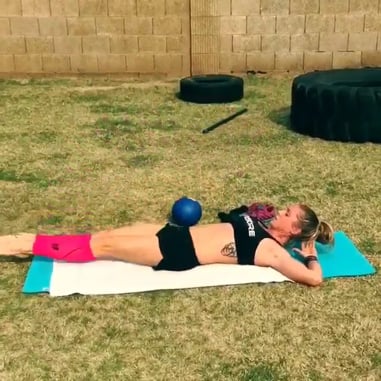
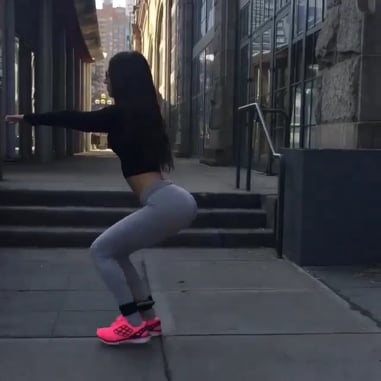
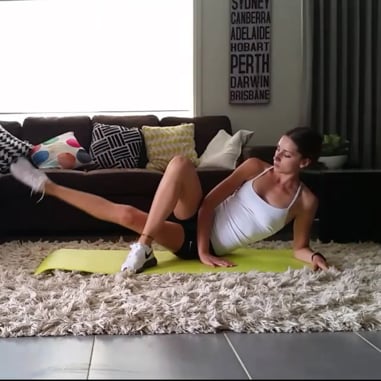
So we made it pretty clear that developing core muscles is important for pretty much everyone. So what exercises can you do to strengthen these muscles? Well, here they come:
High plank
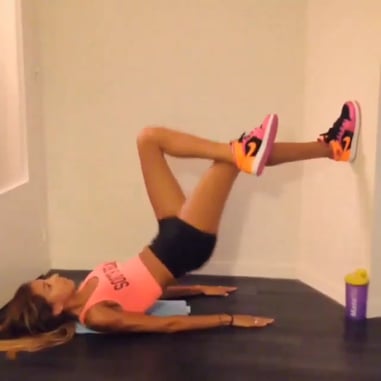
Supine toe tap
Hollowman
Bird Dog
Crunches
Bicycle crunch
Superman
Warrior crunch
Supine leg lifts
Elbow to knee
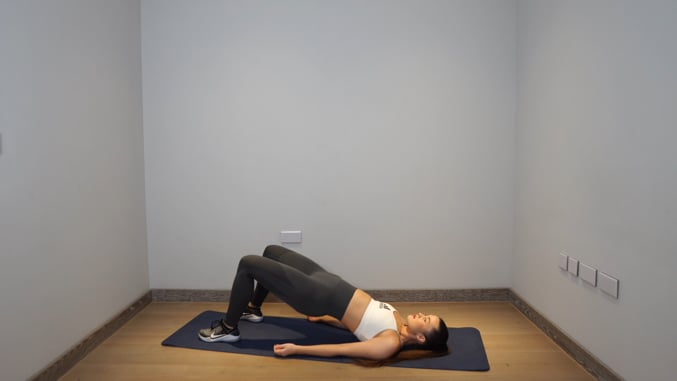
Bridge
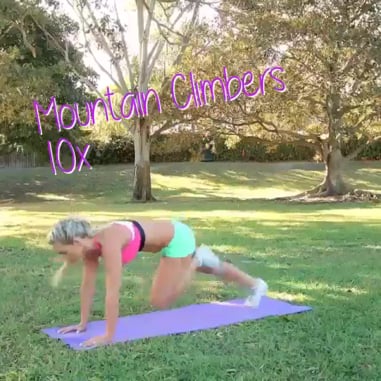
Mountain climber
V-sit
V-ups
Side plank
Plank shoulder taps
Turkish get-up
Elbow plank twists
As you can see, there are many workouts that will no doubt help you develop core muscles and eventually become healthy and fit. So why don’t you grab your fitness mat and try at least some of these useful exercises to see their effectiveness yourself?
Wrapping Up
Not only are core muscles essential for beautiful abs, but also rather important for your back health and posture. Furthermore, these muscles protect your internal organs, which is a pretty important feature. Therefore, if you regularly train but you always avoid core exercises thinking they are not as important as the workouts for your legs or arms, you better stop doing that because core muscles are perhaps the most important muscle group in your body.
Read more
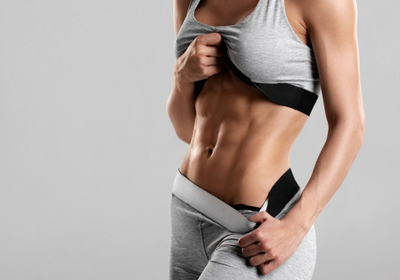
Gorgeous abs are perhaps the biggest dream of all fitness enthusiasts as well as professionals. However, not many people know how to get abs and pretty often make a lot of mistakes while trying to work on their abs. Therefore, in this article, we will talk about abs and how to get them quickly and stress-free
Your Abs Are What You Eat
Not many people know it, but your diet is extremely important for achieving relief abs. Of course, it doesn’t mean that you have to starve yourself or follow weird diets, but working out is definitely not enough to achieve such a goal. The thing is to build muscles you need protein, which means that you have to include more protein into your diet. At the same time, high qualities of sugar and Natrium (salt) provoke swelling that sort of hides the relief of the muscles even if you don’t have much belly fat. Thus, to get the six-pack, you have to make your diet healthier as well as drink enough water, and together with exercising, it will help you get the body of your dreams.
Don’t Overestimate Your Abilities
Many people think that the more they exercise and the less they eat - the better. Obviously, it’s not true. You have to adequately evaluate your abilities and consider those while working out and dieting. Trust us, starving yourself and exercising for 3 hours every day won’t bring better results. It will only damage your health, both physical and mental. So don’t worry if you cannot see the results after a few weeks of training and healthy dieting, just keep going and you’ll surely reach your goal.
Core and Back Muscles Are Essential
Probably 90% of people who would like to get abs usually forget about the core muscles and work only on their abs. This is a huge mistake. As a matter of fact, to have relief abs, you have to work on your core muscles simply because these muscles are close to each other, moreover, abs are a part of the core, so it’s impossible to get relief abs without working on the core. Therefore, working on your core will significantly boost the entire process. In addition to that, you shouldn’t forget about the back muscles. You see, our posture heavily influences the way our belly looks. You have probably already seen skinny people with weird and unproportioned bellies. Well, that happens because they have weak back muscles and their spine is curved in the way that makes their bellies sort of come forward. So in order to avoid that, make sure to strengthen your back muscles too.
Best Workouts for Abs
To wrap up, we would like to list some of the best workouts for abs, core, and back. So here they come:
Plank
Diagonal twists
Deadlift
Pushups
Bent-over row
Plank push-ups
Pull-up
Crunches
TRX suspension row
Leg lifts from lying position
Lat pulldown
Final Thoughts
A stunning six-pack is the biggest dream of many fitness enthusiasts and, luckily, it’s totally possible to make it come true. So consider the things we talked about in this article and start moving toward your goal now.
Read more
Did you know that the deltoid muscle is composed of three parts? Therefore, in order to train more effectively, we need to pay attention to each of them. By doing so, harmonious development of the deltoid muscle is possible. Therefore, the goal is to perform special exercises so that the function of each ligament of the deltoid muscle is involved during training.
If you want to strengthen your deltoid muscles, you need to train them regularly, so we recommend that you do these exercises for the deltoid muscles
Side Dumbbells
If you want to develop the posterior deltoids in your shoulders, this is a great exercise to do. It not only works with the deltoids but also the obliques.Hold the dumbbells with a neutral grip and perform bending forward a little keeping your back straight, at this time the dumbbells should be raised to the level of your ears.
Front Pull-Up
This exercise is great for training the upper body and abdominal obliques.In a seated position, hold a dumbbell in each hand. Lower your arms. Next, raise the dumbbells so that they are parallel to the floor. As you do so, keep your arms straight. When they reach shoulder height, stop. Lower the dumbbells in the same manner. Do the same with the other arm.
Lifting to the Side
Experts recommend performing these exercises to effectively train the outer deltoid muscles. The effectiveness of your training depends on proper practice, so follow these instructions exactly. Hold a dumbbell in each hand and stand up straight. Now slowly lift the dumbbells. When the dumbbells reach shoulder height, hold them there. Then lower the hands slowly and return to the position from the start.
Bench Press
Place the barbell on your chest and bring your elbows forward while tensing your abs, glutes, and legs. Repeat lifting and lowering the barbell, then lifting and lowering again.Do not lift as the bar passes over your face, but lower it toward you for optimal trajectory.If the bar remains in front of you instead of over your body at the apex, you will increase the load on your lower back. Try lifting the bar behind your head. Perform 3-5 sets of 6-8 movements each.
Free Arm Pushups
The exercise itself is a repetition of a smaller range of push-ups with the barbell raised.Stand in an inverted position with your feet against the wall. Bend your elbows to lower your body and place your head on the floor. Lower your head backward and repeat. Be careful when lowering your head to the floor (any unintentional movement can injure your neck).Placing a blanket or thick book under your head will make the exercise more effective.To make it more difficult, place some kind of solid support under your arms. The more reps you do in a set, the better. Perform 3-5 sets, depending on your mood.
Developing your deltoid muscles will improve your athleticism and give you a beautiful body, so if you dream of a beautiful body, please do these exercises.
Read more
The pectoralis major muscle is one of the most difficult muscles to train, but it can be trained. In this article, we will look at the pectoralis major muscle and how to train it.
The development of the chest muscle is an indicator of how hard you are working on your body. This muscle group is one of the largest and most complex muscles in the human body. A good workout requires a combination of basic and isolation exercises. This is the only way to make your muscles perfect.
Exercises with barbells are good for building muscle mass, while exercises with dumbbells and equipment are good for improving form and detail. It is not advisable to use very heavyweights in the beginning. It is much better to get a feel for the muscles needed when working the chest, arms, and shoulders. For example, classic push-ups from the floor will help you feel the pectoral muscles and understand how they work. For proper training, you should use different chest dumbbell exercises to work the muscles from different angles.
Dumbbell Bench Press
Place dumbbells next to your arms. Start by getting into the correct posture. Press the back of your neck, back, and pelvis against the bench. Press your heels to the floor and open your legs 60 degrees. Once you have learned this posture, sit down and take a dumbbell and place it on your lap. Lie down and pull the dumbbells up to your chest. Keep the dumbbells parallel, extending the arms at a slight angle to your elbows. Lower the weights gently and begin the chest exercise by moving your elbows up and down. When you feel your pectoral muscles stretch, return your arms to the position you started from.
Hammer
Start in the correct posture. Sit on the edge of the bench and place the dumbbells on knees. Lie down so that the back of your head, back, and buttocks are pressed firmly against the bench. At the same time, shift weight from your hips to your chest. Lift arms in front of you, maintaining a 90-degree angle. Place your palms so they face each other and bend your elbows slightly. Inhale when bending your arms and pulling the dumbbells toward your chest. As you exhale, relax the hips and focus on tensing your pectoral muscles. Repeat. It is important to concentrate on your pectoral muscles because the 'hammer' puts extra tension on your triceps. This exercise is performed slowly and requires a lot of concentration. This exercise is ideal for beginners or players recovering from chest, shoulder, or elbow injuries.
Dumbbell Press
Lie on a bench so that your neck, shoulders, and hips are in close contact with the surface of the chair. Make the feet close to the floor, holding a dumbbell in each hand at chest level, one hand on the other. Secure the dumbbells behind your head, concentrating on stretching your pectoral muscles. This only works the shoulders. Apply maximum tension on the lower amplitude and return the arms in the same trajectory. Since this dumbbell chest exercise is a supplemental exercise, it makes sense to mix it up with the basic exercises. It also stretches the pectoral muscles and helps to shape the chest. Make sure your head is supported in this position.If not, you may injure your neck muscles or cause nerve compression. Work with dumbbells smoothly and avoid sudden jerks or extreme weights.
Also, remember that while warming up before a workout can help build endurance and recovery, it should not be relied upon exclusively. Proper sleep and nutrition are the most important factors in achieving gym results.
Chest exercises can help improve your sense of security and overall health, so be sure to at least train these muscles.
Read more
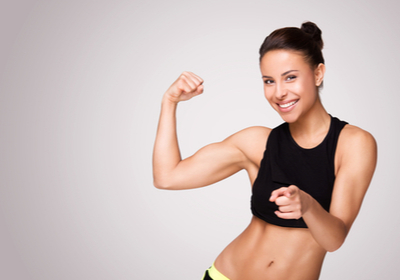
Relief of the biceps is one of the main goals of everybody who does sports and works on their body. At the same time, it’s pretty hard to develop these muscles because of a wide variety of reasons. In this article, we’ll talk about biceps and how to develop these muscles. So let us dive in.
What Is Biceps?
The biceps is the muscle of the upper arm that consists of two parts, which are the long head and the short head. The muscle is connected to the bone with the proximal biceps tendons in the shoulder joint and the distal biceps tendons in the elbow joint. To put it simply, the biceps is a big muscle that is situated in the upper arm from the shoulder to the forearm. The main function of the biceps is to extend and flex the arm at the elbow. It also helps rotate the forearm and hand. So basically, this muscle allows us to lift objects, hold heavy things, and do many other daily things.
Tips on How to Grow Biceps?
Certainly, everybody dreams of relief biceps muscles, but achieving this goal is not that easy. In fact, except for working out, you need to do a lot of other stuff to grow biceps muscles. So here are some tips and tricks on how to grow biceps fast and stress-free:
Eat more protein. For building any muscle, our body needs amino acids and the best way to get them is to eat more protein.
Exercise regularly. In order to succeed in any area, you need to practice regularly. The same goes for developing bicep muscles - you need to work out regularly.
Consider having your thyroid checked. If you eat protein and exercise but you still see no progress, you might want to visit a doctor and have your thyroid checked because there might be some hormonal issue.
Don’t be upset if you don’t see immediate results. Growing biceps takes quite a lot of time, so don’t be upset if after a few weeks of training you see no result. Just continue moving towards your goal, and soon, you’ll reach it.
Make sure you do the right workouts. Not all arm workouts are aimed at the biceps, so you have to ensure you do the right exercises. If you have any doubts, you can always consult your personal trainer or check out this information on the internet.
These simple tips will help you reach your goal faster, so make sure to use them.
Best Workouts Biceps
To wrap up, we would like to provide you with some basic biceps workouts. So without any further ado, here they come:
Barbell curl
Standing dumbbell curl
Cable curl
Zottman curl
Chin-up
Barbell bent-over row
Reverse-grip bent-over row
Underhand seated row
EZ-bar preacher curl
Twisting dumbbell curl
Cable hammer curl
Inverted row
Hammer curl
Meadows row
Concentration curl
Seated cable row
Incline dumbbell curl
Final Thoughts
Gorgeous relief biceps is a dream come true for many men and women. But why dream of it if you can make it real? Explore the biceps workouts in the video section and make your dream of having developed biceps come true.
Read more