
VIDEO
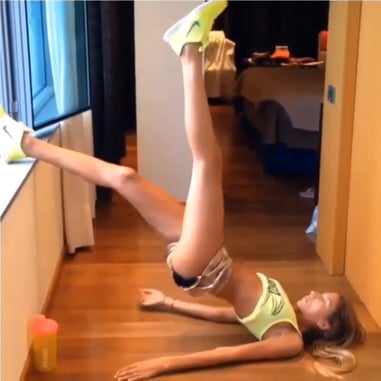
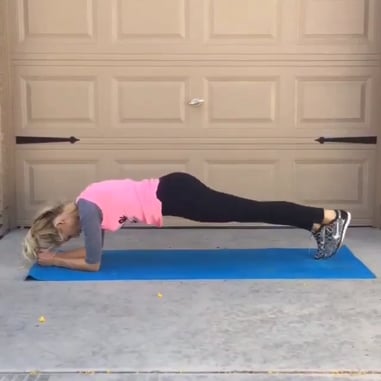
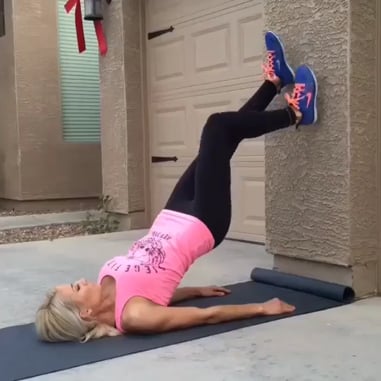
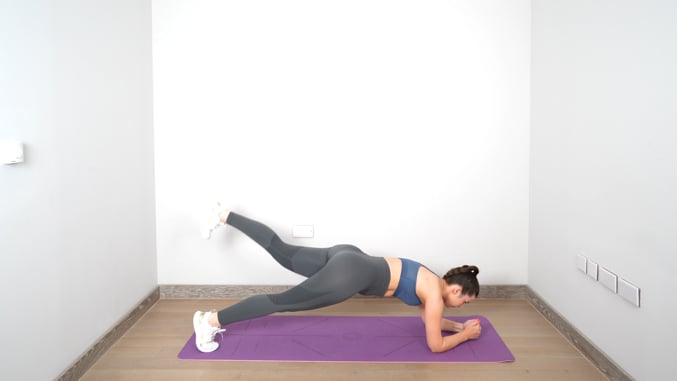
Bridge Variation, Elbow Plank Reverse Leg Lifts Variation, Single Leg Glute Bridge
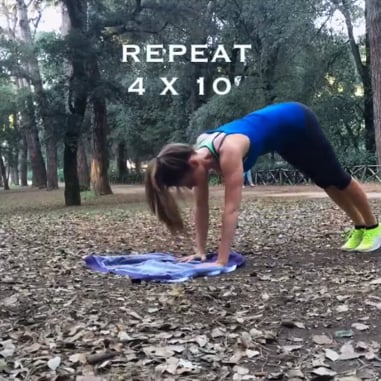
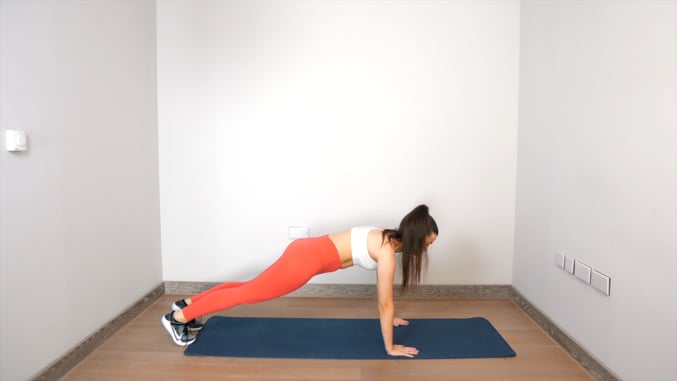
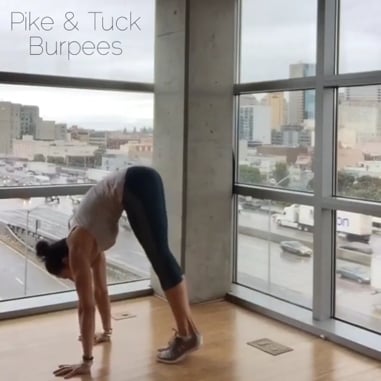
1.Lay back on a mat with your shoulders on the mat, your knees bent, feet on the wall, and your palms on the mat. Start moving your gluteus up and down in a smooth and slow tempo. 2.Start from an elbow-plank position with your hands on the mat, your feet on the elevated surface and your legs extended. Kick your left leg up. While lowerring it back on the mat, lift your hips and sqeeze your gluteus. Repeat the same action beginning with the right leg. 3. Lay back on a mat with your shoulders on the mat, your legs exteded, feet on the elevated surface, and your palms on the mat. Lift one leg up and start moving your gluteus up and down in a smooth and slow tempo. Then Lift the other leg and continue moving your gluteus.
save to ...
RECOMMENDED FOR YOU


Blog
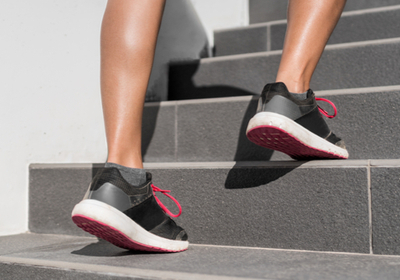
Sure, everyone familiar with running knows the importance of strengthening the foot and ankle ligaments. The other thing is that sometimes it's hard to spend 5-10 minutes preparing for ankle exercises: we get dressed, lace up our shoes and run down the street. This is unfortunate. After all, good elastic ligaments can reduce the risk of leg pain. And strong ankle muscles can improve lower back and even shoulder strength when you're running or just walking.
Of course, there are plenty of good exercises to help you strengthen your ankles, so without further ado, let's take a look.
Stretching
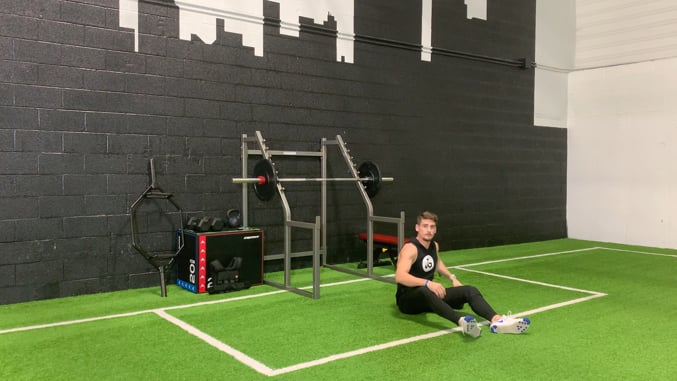
Sit on the floor and straighten your leg in front of you. It's important to make sure your big toe, little toe, and heel stay in the same direction as you extend your foot. Only then the muscles will be strengthened and stretched in a balanced manner so that you don't walk and run with your foot falling out or in. While pulling your foot apart, stretch your toes as much as possible, as if you were lengthening them, without tucking them under your feet. Repeat 15 times.
Rolling Pose
From a seated position, place your feet in front of you and bring your feet as close to yourself as possible. Spread your knees and keep your feet together. Keeping your feet in this position, place your hands on the floor, bend your body forward and lift your pelvis off the floor and try to stay in this position for a while. If you feel your potential, you can roll to the left and to the right, touching your feet with the palms of your hands.
Rising and falling Exercise
It is traditionally recommended to do these on a ladder, but doing them slowly on a flat surface will give good results. Raise your toes as high as you can, keeping your heels in the air, then bend your knees so your heels are forward. Place your heel on the floor and then straighten your leg. It is very important to make sure your knees and ankles don't flip or drop.
Dumbbell Squats
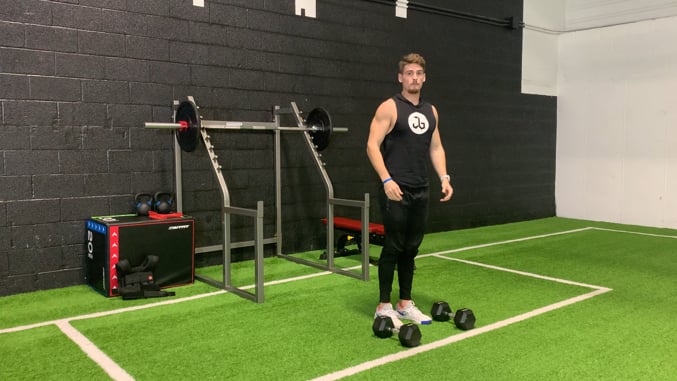
Deep squats are good for developing the ankles, and when combined with dumbbells or barbells (if you have trained enough), this exercise is even more effective. Start with dumbbells that you can lift 15 times without dropping to the floor. 2-3 kg is suitable for beginners. Bodybuilders need to lift more weight to develop their leg muscles. Make a deep squat as follows: stand up straight with your feet shoulder-width apart, arms at your sides, holding a dumbbell, or if you are doing the exercise with a barbell, place it in front of your chest or behind your head. Sit down with your knees bent and your hips on the floor. Keeping your back straight, squat down until your thighs are parallel to the floor. Keep your knees straight over your feet at all times and do not extend your knees further than your toes. Return to the starting position. Perform 2 sets of 10-15 squats each.
Lunges
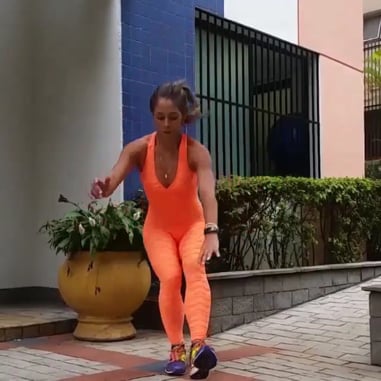
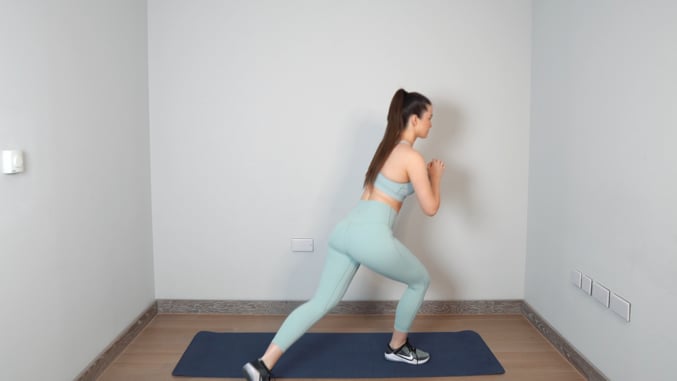
Keeping your torso straight and your shoulders back, step forward and sit until both knees are at a 90-degree angle. Your knees should not protrude over your toes. Do a series of two on each leg and repeat 10 times.
Final Words
Strengthening your ankles is crucial for professional and amateur athletes alike, so whether sports are your life or you're just exercising to stay healthy, in is necessary to work on your ankles.
Read more
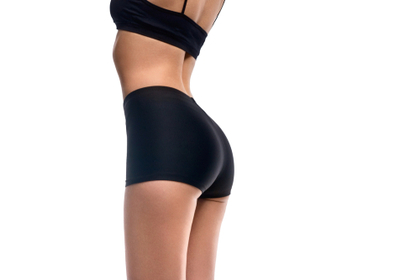
Many people want to have beautiful thighs. Unfortunately, to keep them in good shape requires long and hard work. Here are some exercises that are sure to help you work out your thighs.
Cross Lunges
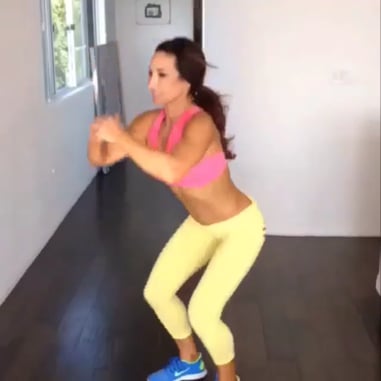
This deep stretch will improve your thighs and give you energy. Spread your legs and point your feet outward. Bending your knees, lower yourself into a squat position. Put the palms on your hips above your knees to deepen the squat and stretch further. Jump up and put your feet in front of each other, straightening and crossing your legs as you land. Get back to the position from the start and repeat the actions with the opposite leg. Repeat this exercise as many times as possible, alternating between the two legs, for at least 40 seconds.
Knee Squats
Knee squats together are better to strengthen the inner thighs, quads, and hamstrings than regular squats. And to avoid wasting time, you can work your arms at the same time. Stand up straight with your feet together. Pick up some dumbbells, bend your arms at the elbows, and bring them into contact with your shoulders. Perform squats with your knees bent and your hips pulled back as if you were going to sit on a chair. Keep your feet together throughout the exercise holding the weight on your heels. Now extend your arms upward. Return to the start without transferring the weight to your toes. Do 10 repetitions.
Elbow Plank Leg Lift
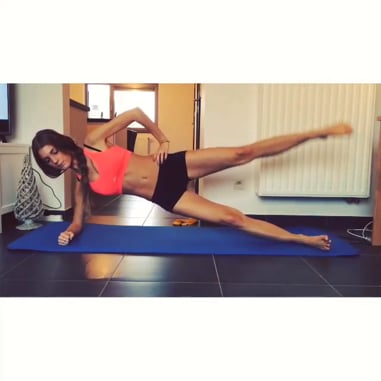
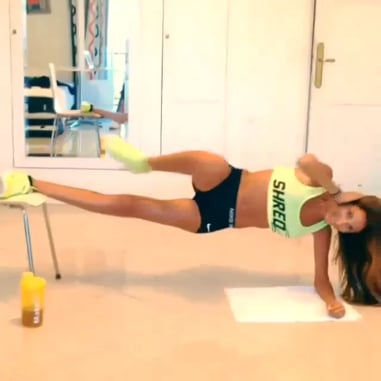
Add leg lifts to the regular elbow plank to improve hip work. Lie on your side, and bend your right arm at the elbow leaning on it. Stretch your leg so that your body is in a straight line. Try to lean only on the outer edge of your right leg. Place your left hand on your hip. Feel your spine stretching and the tension in your abs, then raise your left leg slightly to your hip. Slowly put it back down. Without bending at the waist or leaning on your shoulders, place the weight on your elbows. Do about 15 reps on both sides.
Leg bend swing
This is one of the most popular exercises for strengthening the hips and thighs. It is suitable for everyone, requires no additional equipment, and does not involve the spine. This combination works the posterior, anterior, lateral, and medial thighs. Start doing the plank with your palms under your shoulders and your knees under your pelvis, keeping your back in position. As you exhale, push up on your heels; do 20 reps on each leg for four sets.
Side push-ups
If this is your first time doing this exercise, you don't need any dumbbells - learn the leg movements first. Holding a dumbbell in your right hand, run hard to the left and place your right hand onto your right leg. Lower your hips as far as you can and lean on your heels. Point your toes forward and bend your leg at a 90-degree angle. Push off with your left foot and get into a courtesy position: left foot back, right foot forward. Raise your arms with weights upward, pointing your feet up. Keep your hips and legs tense. Do not return to the start for the repetitions, but go straight from squat to side position. Perform three sets of 10 reps each, then switch sides.
Final Words
If you know that beautiful thighs are a reality and you have these exercises, then why not try and make your body better?
Read more

СWorking on the core muscles is not only essential for good looks, but also for your health. In this article, we will talk about core muscles and how to develop them. So without any further ado, let us begin.
Core Muscles: What Do They Consist of?
To put it simply, core muscles consist of two main groups, which are central and peripheral. The central muscles resemble a sac that protects internal organs by covering the abdominal cavity. In other words, we need these muscles to keep the vital organs safe. In fact, if we didn’t have these muscles, a slight kick in the abdominal area would cause significant damage to vital organs. Central muscles can be divided into several parts, which are:
Front - abs
Lateral parts - oblique muscles and the surrounding muscles
Back - the muscles that support the spine
Upper wall - diaphragm
Lower wall - pelvic floor muscles
The second group of core muscles, the peripheral muscle group, consists of the trapezius, the latissimus dorsi muscle, the pectoralis muscle, the buttocks, and the muscles of the shoulder girdle. These muscles are essential for our posture and back health, which means that developing those is rather important for everyone who wants to be healthy and look beautiful.
Both central and peripheral core muscle groups are extremely significant for our health, posture, as well as the way we look. Therefore, in the next paragraph, we are going to talk about the best exercises for strengthening these muscles.
Best Workouts for Strengthening Core Muscles
So we made it pretty clear that developing core muscles is important for pretty much everyone. So what exercises can you do to strengthen these muscles? Well, here they come:
High plank
Supine toe tap
Hollowman
Bird Dog
Crunches
Bicycle crunch
Superman
Warrior crunch
Supine leg lifts
Elbow to knee
Bridge
Mountain climber
V-sit
V-ups
Side plank
Plank shoulder taps
Turkish get-up
Elbow plank twists
As you can see, there are many workouts that will no doubt help you develop core muscles and eventually become healthy and fit. So why don’t you grab your fitness mat and try at least some of these useful exercises to see their effectiveness yourself?
Wrapping Up
Not only are core muscles essential for beautiful abs, but also rather important for your back health and posture. Furthermore, these muscles protect your internal organs, which is a pretty important feature. Therefore, if you regularly train but you always avoid core exercises thinking they are not as important as the workouts for your legs or arms, you better stop doing that because core muscles are perhaps the most important muscle group in your body.
Read more
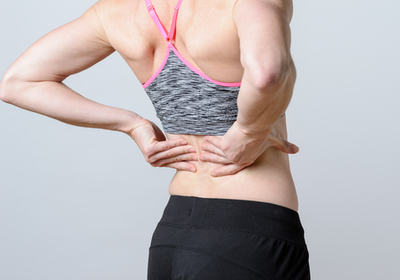
Lower back muscles easily get sore and injured as well as are rather challenging to train. At the same time, these muscles are essential for one’s back health. So what is the anatomy of lower back muscles, and how to develop them? This is exactly what we are going to talk about in this article.
Lower Back Muscles: Anatomy & Functions
The lower back muscle group consists of several muscles, which are multifidus muscles, erector spinae, spinalis, and latissimus dorsi. These muscles are essential for posture, moving, and even involved in the walking process. In fact, lower back muscles are super important for normal functioning, and those people who have suffered any lower back injuries know it. In addition to that, these muscles are actively involved in the special moves in certain sports like gymnastics as well as in various dance styles. So even though these muscles seem to be small and unimportant, yet they actually have lots of functions.
Why Is It Important to Develop Your Lower Back Muscles?
Many people believe that, in terms of the spine, you only need to work on the trapezius and upper back since these muscles are essential for the right posture. Certainly, it’s not exactly true. In fact, you have to work on your entire spine to harmoniously develop all the muscles of your back. Plus, the lower back easily gets injured, especially if you lift something heavy, but if you have strong and developed lower back muscles, you can reduce the risks of having such an injury. So no matter if you are an office worker or a professional athlete or dancer, you need to work on your lower back muscles.
Workouts for the Lower Back Muscles
So how can you make your lower back muscles stronger and therefore lower your chances of getting a nasty injury? Well, here are some exercises you might want to try:
Rack pull
Harvesting apples
Bent over row
Side stretching
Barbell good morning
Belly roll
Back extension
Side plank
Superman
Glute hamstring raise
These simple exercises will no doubt help you make your lower back stronger and healthier, so do not hesitate and give them a try.
Final Thoughts
Developed lower back muscles are not only needed for professional athletes or dancers but also for those people who want to maintain their back health. So make sure to include at least a few lower back workouts into your exercise routine. Trust us, you won’t regret it.
Read more
Did you know that the deltoid muscle is composed of three parts? Therefore, in order to train more effectively, we need to pay attention to each of them. By doing so, harmonious development of the deltoid muscle is possible. Therefore, the goal is to perform special exercises so that the function of each ligament of the deltoid muscle is involved during training.
If you want to strengthen your deltoid muscles, you need to train them regularly, so we recommend that you do these exercises for the deltoid muscles
Side Dumbbells
If you want to develop the posterior deltoids in your shoulders, this is a great exercise to do. It not only works with the deltoids but also the obliques.Hold the dumbbells with a neutral grip and perform bending forward a little keeping your back straight, at this time the dumbbells should be raised to the level of your ears.
Front Pull-Up
This exercise is great for training the upper body and abdominal obliques.In a seated position, hold a dumbbell in each hand. Lower your arms. Next, raise the dumbbells so that they are parallel to the floor. As you do so, keep your arms straight. When they reach shoulder height, stop. Lower the dumbbells in the same manner. Do the same with the other arm.
Lifting to the Side
Experts recommend performing these exercises to effectively train the outer deltoid muscles. The effectiveness of your training depends on proper practice, so follow these instructions exactly. Hold a dumbbell in each hand and stand up straight. Now slowly lift the dumbbells. When the dumbbells reach shoulder height, hold them there. Then lower the hands slowly and return to the position from the start.
Bench Press
Place the barbell on your chest and bring your elbows forward while tensing your abs, glutes, and legs. Repeat lifting and lowering the barbell, then lifting and lowering again.Do not lift as the bar passes over your face, but lower it toward you for optimal trajectory.If the bar remains in front of you instead of over your body at the apex, you will increase the load on your lower back. Try lifting the bar behind your head. Perform 3-5 sets of 6-8 movements each.
Free Arm Pushups
The exercise itself is a repetition of a smaller range of push-ups with the barbell raised.Stand in an inverted position with your feet against the wall. Bend your elbows to lower your body and place your head on the floor. Lower your head backward and repeat. Be careful when lowering your head to the floor (any unintentional movement can injure your neck).Placing a blanket or thick book under your head will make the exercise more effective.To make it more difficult, place some kind of solid support under your arms. The more reps you do in a set, the better. Perform 3-5 sets, depending on your mood.
Developing your deltoid muscles will improve your athleticism and give you a beautiful body, so if you dream of a beautiful body, please do these exercises.
Read more