
VIDEO
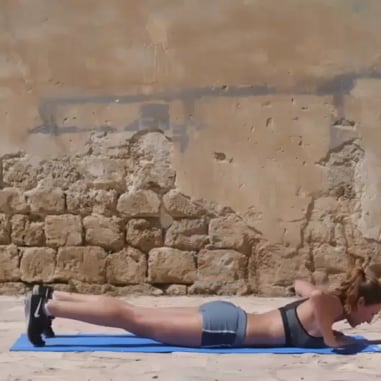
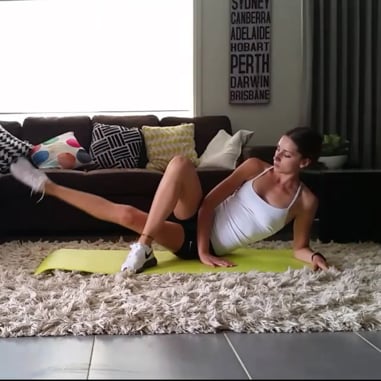
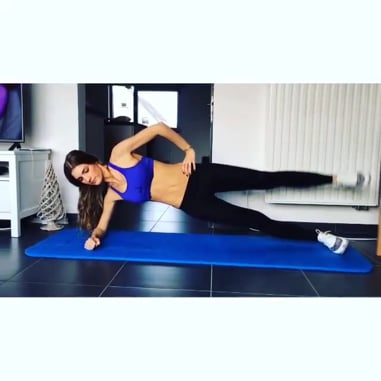
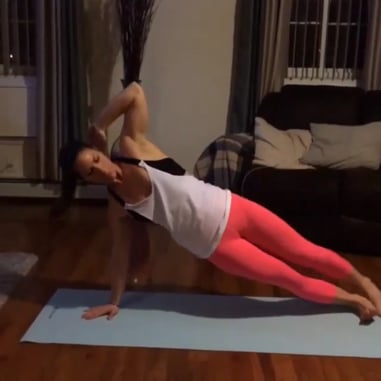
Plank Variation, Plank Jumps, Plank Jumping Jacks, Plank High Knee Lifts, Elbow Plank Side Leg Lifts, Elbow Plank Reverse Leg Lifts, Elbow Plank Hip Twist, Pushups
Plank Variation, Plank Jumps, Plank Jumping Jacks, Plank High Knee Lifts, Elbow Plank Side Leg Lifts, Elbow Plank Reverse Leg Lifts, Elbow Plank Hip Twist, Pushups
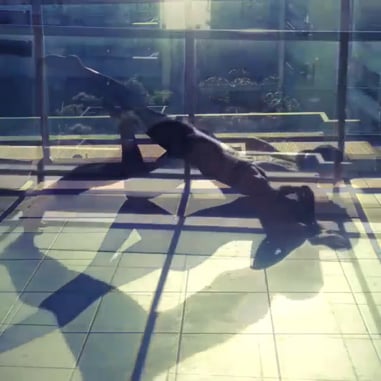
1. Start with the plank position. Jump with your legs forward without changing the position. Get back and move your legs sideways. 2. Being in a plank position run staying in this position. 3. Being in a plank position put your left leg upwards. Bend your right knee. Move your hips sideways. 4. Start with a push-ups position. Do a push-up and go to the plank position. Repeat it.
save to ...
RECOMMENDED FOR YOU

Blog
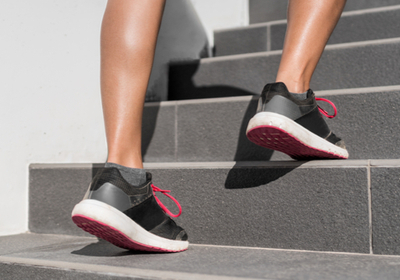
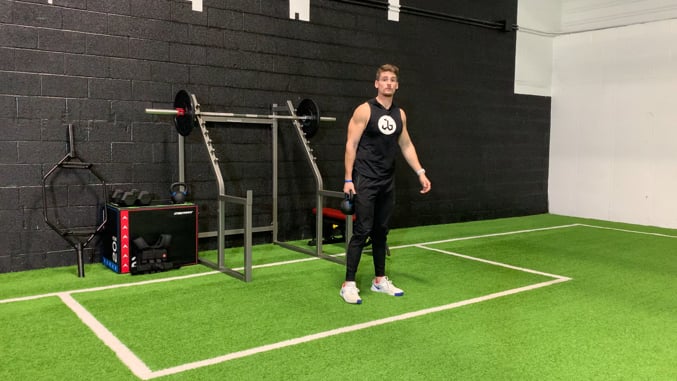
Sure, everyone familiar with running knows the importance of strengthening the foot and ankle ligaments. The other thing is that sometimes it's hard to spend 5-10 minutes preparing for ankle exercises: we get dressed, lace up our shoes and run down the street. This is unfortunate. After all, good elastic ligaments can reduce the risk of leg pain. And strong ankle muscles can improve lower back and even shoulder strength when you're running or just walking.
Of course, there are plenty of good exercises to help you strengthen your ankles, so without further ado, let's take a look.
Stretching
Sit on the floor and straighten your leg in front of you. It's important to make sure your big toe, little toe, and heel stay in the same direction as you extend your foot. Only then the muscles will be strengthened and stretched in a balanced manner so that you don't walk and run with your foot falling out or in. While pulling your foot apart, stretch your toes as much as possible, as if you were lengthening them, without tucking them under your feet. Repeat 15 times.
Rolling Pose
From a seated position, place your feet in front of you and bring your feet as close to yourself as possible. Spread your knees and keep your feet together. Keeping your feet in this position, place your hands on the floor, bend your body forward and lift your pelvis off the floor and try to stay in this position for a while. If you feel your potential, you can roll to the left and to the right, touching your feet with the palms of your hands.
Rising and falling Exercise
It is traditionally recommended to do these on a ladder, but doing them slowly on a flat surface will give good results. Raise your toes as high as you can, keeping your heels in the air, then bend your knees so your heels are forward. Place your heel on the floor and then straighten your leg. It is very important to make sure your knees and ankles don't flip or drop.
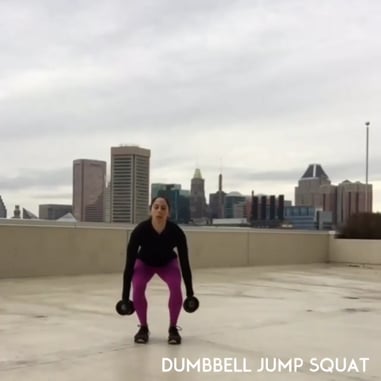
Dumbbell Squats
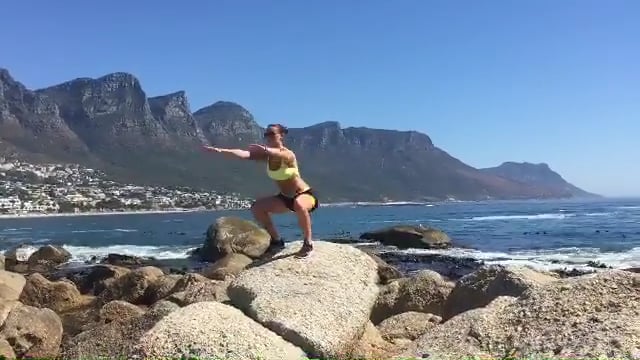
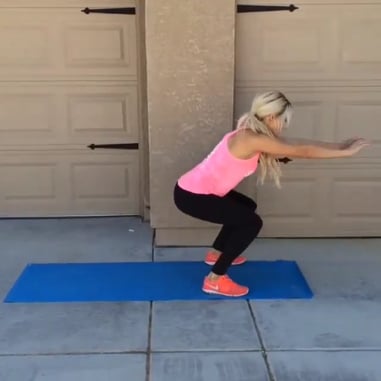
Deep squats are good for developing the ankles, and when combined with dumbbells or barbells (if you have trained enough), this exercise is even more effective. Start with dumbbells that you can lift 15 times without dropping to the floor. 2-3 kg is suitable for beginners. Bodybuilders need to lift more weight to develop their leg muscles. Make a deep squat as follows: stand up straight with your feet shoulder-width apart, arms at your sides, holding a dumbbell, or if you are doing the exercise with a barbell, place it in front of your chest or behind your head. Sit down with your knees bent and your hips on the floor. Keeping your back straight, squat down until your thighs are parallel to the floor. Keep your knees straight over your feet at all times and do not extend your knees further than your toes. Return to the starting position. Perform 2 sets of 10-15 squats each.
Lunges
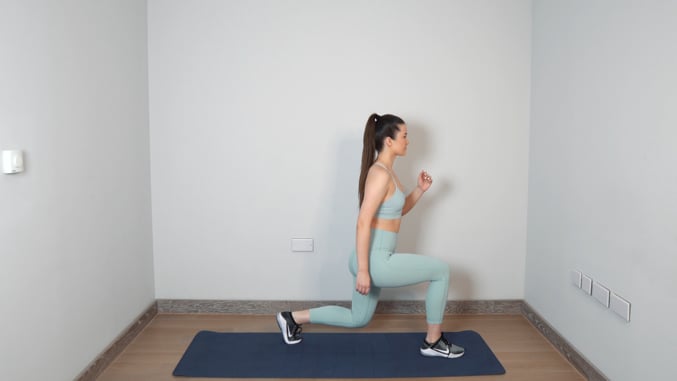
Keeping your torso straight and your shoulders back, step forward and sit until both knees are at a 90-degree angle. Your knees should not protrude over your toes. Do a series of two on each leg and repeat 10 times.
Final Words
Strengthening your ankles is crucial for professional and amateur athletes alike, so whether sports are your life or you're just exercising to stay healthy, in is necessary to work on your ankles.
Read more

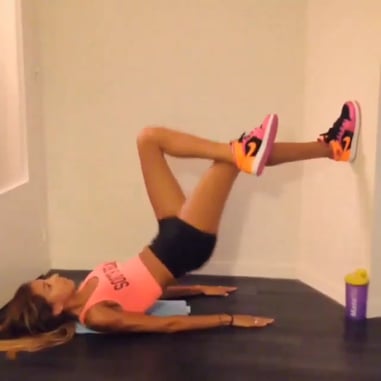
The Kardashians have created many beauty trends, one of which is having beautiful buttocks. So, in this article, we'll talk about building great gluteus muscles so you can look as attractive as Kim, Kourtney, and Khloe. Let's begin by looking at the anatomy. The glutes are made up of three main parts.
The gluteal maximum muscles, which are the largest muscles in the body, help to maintain balance when walking and running. They allow your legs to move sideways and are also responsible for contouring the shape of the buttocks.
The gluteus medius is overlaid in part by the gluteus maximus and is located at the top of the pelvis. It is involved in leg extension, lateral flexion, and body stabilization during the movement.
Finally, below is the gluteus minimus. Both are in charge of leg induction and body stabilization, as well as shaping the thigh line.
Training for the glutes
Building your glute muscles isn't easy, particularly when you're on a tight schedule. However, by working out at least three times a week and never giving up, you will quickly reach your goal. To help you achieve your goals, we've compiled the best exercises for your gluteus muscle development.
Deep squat with a barbell
This is one of the basic exercises that help to develop this muscle effectively. From the starting position - with your feet apart - lower your pelvis below the knees. Keep your lower back straight and make sure the knees do not go over your feet. Spreading your legs wider apart puts more pressure on your hips.
Romanian deadlifts
Stand up straight with a slight bend at the waist. Holding the dumbbells in both hands, bend over and pull your pelvis backward. Reaching a point just below your knees, return to start.
Dumbbell split squat
Exercise with a straight back and one leg stepping forward while the other leg is thrown into a brace behind you. Squat down and perform the exercise with both legs.
Back lunges
From the standing position, take a large step backward and drop down to form a bent-over position. Return to start and repeat this exercise for the other leg. Make sure your knee is bent at a right angle and not sticking out past your toes, do 20-30 reps. It is important to step backward precisely, maintaining rhythm and balance.
Having great gluteus is everyone's dream, and luckily, developing these muscles isn't difficult if you know the right exercises. So why not take advantage of our tips and start working towards your goal right now?
Read more
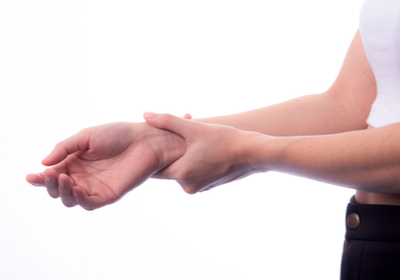
Believe it or not, wrist muscles are extremely important. In fact, developed wrist muscles allow you to correctly do such exercises as planks, push-ups, handstands, as well as various workouts with dumbbells. In other words, most sports require strong wrists, and if you want to succeed in gymnastics, martial arts, CrossFit, or climbing, you have to make sure you have strong wrist muscles. But how to achieve that? Let's talk about wrist muscles and how to develop them in more detail.
Why are wrist muscles so important?
Not many people know about the importance of wrist muscles, yet strong wrists are significant in fitness and many other sports. The thing is that developed wrists and joint mobility are significant for avoiding injuries. For example, such sports as tennis, volleyball, CrossFit, boxing, gymnastics, archery, basketball, canoe, and even bowling have a rather serious load on the hands and wrists. Therefore, one wrong move can cause significant damage to the muscles and tendons of your wrists and hands. At the same time, developed and stretched muscles lower the chances of getting severely injured or injured at all. So this is the main reason why working on wrist muscles is so important for pretty much everyone.
Do I need to develop wrist muscles if I don’t do any sports?
Of course, now many of you can come to the conclusion that they do not have to work on their wrists because they don’t do any sports or do those sports that do not require strong wrists. Well, this is, obviously, not true. Perhaps everybody needs to work on their wrists, especially people who work long hours on the computers. The thing is typing and mouse clicking is not particularly good for the health of our wrists because of the positions of our hands during those activities. Moreover, some people even struggle with carpal tunnel syndrome, which is often caused by typing. However, typing is not the only thing that can cause this syndrome. Pianists, guitarists, as well as other people whose work involves repetitive movements of the wrist, are in the risk group. Certainly, this is a rather unpleasant disease but you can lower the chances of getting it by regular exercising. So the answer to this question is: yes, you do need to work on your wrist muscles even though you don’t do any sports.
Best workouts for wrists
Now as we know how important it is to work on your wrist muscles, let us take a brief look at the best exercises for developing these muscles. So here they come:
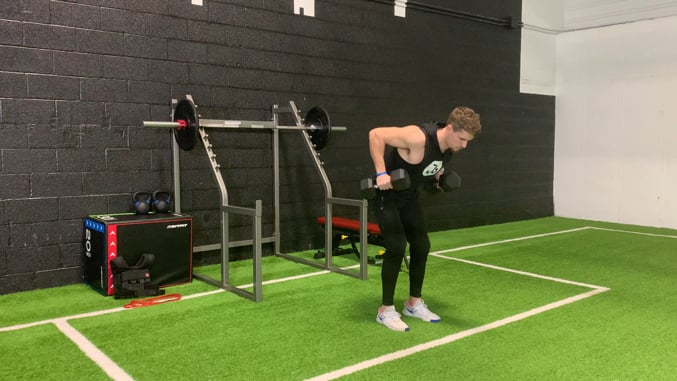
Dumbbell rows
Holding dumbbells
Wrist stretching
Hand rotation with dumbbells
Tennis ball squeeze
These simple exercises will help you strengthen your wrists and hands and therefore help you maintain your wrist health, so make sure to give them a try.
Final thoughts
As you can see, strong wrists are not only important for athletes, but also for regular office workers, musicians, and pretty much everyone. So why don’t you start working on your wrists now?
Read more
Did you know that the deltoid muscle is composed of three parts? Therefore, in order to train more effectively, we need to pay attention to each of them. By doing so, harmonious development of the deltoid muscle is possible. Therefore, the goal is to perform special exercises so that the function of each ligament of the deltoid muscle is involved during training.
If you want to strengthen your deltoid muscles, you need to train them regularly, so we recommend that you do these exercises for the deltoid muscles
Side Dumbbells
If you want to develop the posterior deltoids in your shoulders, this is a great exercise to do. It not only works with the deltoids but also the obliques.Hold the dumbbells with a neutral grip and perform bending forward a little keeping your back straight, at this time the dumbbells should be raised to the level of your ears.
Front Pull-Up
This exercise is great for training the upper body and abdominal obliques.In a seated position, hold a dumbbell in each hand. Lower your arms. Next, raise the dumbbells so that they are parallel to the floor. As you do so, keep your arms straight. When they reach shoulder height, stop. Lower the dumbbells in the same manner. Do the same with the other arm.
Lifting to the Side
Experts recommend performing these exercises to effectively train the outer deltoid muscles. The effectiveness of your training depends on proper practice, so follow these instructions exactly. Hold a dumbbell in each hand and stand up straight. Now slowly lift the dumbbells. When the dumbbells reach shoulder height, hold them there. Then lower the hands slowly and return to the position from the start.
Bench Press
Place the barbell on your chest and bring your elbows forward while tensing your abs, glutes, and legs. Repeat lifting and lowering the barbell, then lifting and lowering again.Do not lift as the bar passes over your face, but lower it toward you for optimal trajectory.If the bar remains in front of you instead of over your body at the apex, you will increase the load on your lower back. Try lifting the bar behind your head. Perform 3-5 sets of 6-8 movements each.
Free Arm Pushups
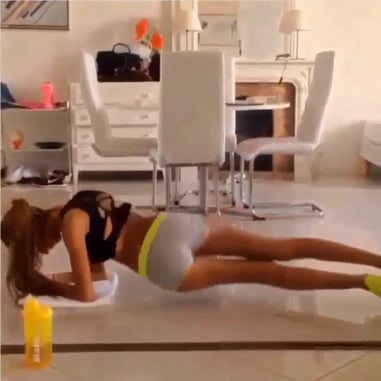
The exercise itself is a repetition of a smaller range of push-ups with the barbell raised.Stand in an inverted position with your feet against the wall. Bend your elbows to lower your body and place your head on the floor. Lower your head backward and repeat. Be careful when lowering your head to the floor (any unintentional movement can injure your neck).Placing a blanket or thick book under your head will make the exercise more effective.To make it more difficult, place some kind of solid support under your arms. The more reps you do in a set, the better. Perform 3-5 sets, depending on your mood.
Developing your deltoid muscles will improve your athleticism and give you a beautiful body, so if you dream of a beautiful body, please do these exercises.
Read more
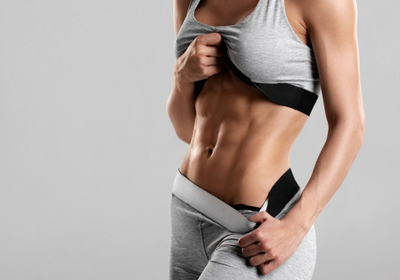
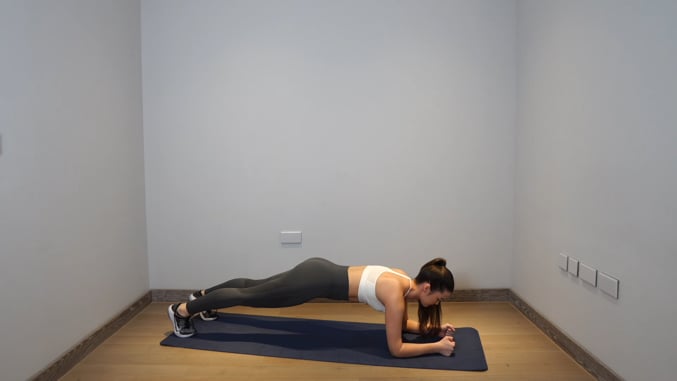
Gorgeous abs are perhaps the biggest dream of all fitness enthusiasts as well as professionals. However, not many people know how to get abs and pretty often make a lot of mistakes while trying to work on their abs. Therefore, in this article, we will talk about abs and how to get them quickly and stress-free
Your Abs Are What You Eat
Not many people know it, but your diet is extremely important for achieving relief abs. Of course, it doesn’t mean that you have to starve yourself or follow weird diets, but working out is definitely not enough to achieve such a goal. The thing is to build muscles you need protein, which means that you have to include more protein into your diet. At the same time, high qualities of sugar and Natrium (salt) provoke swelling that sort of hides the relief of the muscles even if you don’t have much belly fat. Thus, to get the six-pack, you have to make your diet healthier as well as drink enough water, and together with exercising, it will help you get the body of your dreams.
Don’t Overestimate Your Abilities
Many people think that the more they exercise and the less they eat - the better. Obviously, it’s not true. You have to adequately evaluate your abilities and consider those while working out and dieting. Trust us, starving yourself and exercising for 3 hours every day won’t bring better results. It will only damage your health, both physical and mental. So don’t worry if you cannot see the results after a few weeks of training and healthy dieting, just keep going and you’ll surely reach your goal.
Core and Back Muscles Are Essential
Probably 90% of people who would like to get abs usually forget about the core muscles and work only on their abs. This is a huge mistake. As a matter of fact, to have relief abs, you have to work on your core muscles simply because these muscles are close to each other, moreover, abs are a part of the core, so it’s impossible to get relief abs without working on the core. Therefore, working on your core will significantly boost the entire process. In addition to that, you shouldn’t forget about the back muscles. You see, our posture heavily influences the way our belly looks. You have probably already seen skinny people with weird and unproportioned bellies. Well, that happens because they have weak back muscles and their spine is curved in the way that makes their bellies sort of come forward. So in order to avoid that, make sure to strengthen your back muscles too.
Best Workouts for Abs
To wrap up, we would like to list some of the best workouts for abs, core, and back. So here they come:
Plank
Diagonal twists
Deadlift
Pushups
Bent-over row
Plank push-ups
Pull-up
Crunches
TRX suspension row
Leg lifts from lying position
Lat pulldown
Final Thoughts
A stunning six-pack is the biggest dream of many fitness enthusiasts and, luckily, it’s totally possible to make it come true. So consider the things we talked about in this article and start moving toward your goal now.
Read more